


Incubators have traditionally been a mainstay for most biological and life science laboratories, to grow or sustain biological cultures, reproduce germ colonies or breed/grow insects. The most basic incubators allow researchers to recreate strict temperature conditions for optimal growth, development and/or maintenance of finicky cells. Temperature homogeneity is also critical, as fluctuations in the living environment can be deadly.
As the fields of biotechnology and biopharmaceuticals have expanded, the demand for higher-precision incubators has increased. In addition, regulatory requirements regarding good-laboratory and -manufacturing practices (GLP and GMP) have been refined and intensified. Among other things, this has resulted in the advent of increased sophistication for cell culture control and monitoring. Additional instrument features means additional cost, leaving many lab managers wondering if all the bells and whistles are really necessary for their applications.
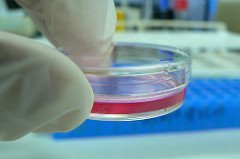
Practically speaking, shrinking laboratory budgets have left many labs seeking affordable options that do not compromise the results of their experiments. In regards to incubators with carbon dioxide sensors and controllers, the sample type will determine if it’s necessary, as some cell types depend on it for ideal development. Here are some points to consider:
Do I Need CO2控制?

基准科学’s myTemp™ Mini CO2 digital incubator
孵化器通常控制用户指定的内部温度和湿度条件。另一个常见特征是控制二氧化碳的能力(CO2) to around 5%. This is important for two reasons: 5% CO2密切模拟细胞在身体系统内体验的生理条件,并用作关键的pH缓冲液。事实上,培养细胞内的pH水平非常重要,即大多数细胞培养基含有指标,使得运营商可以在视觉上识别pH中的危险变化。培养物中的动物细胞已从其较大的生物“宿主”中除去(即器官),但研究人员希望获得与生物体最相关的结果。
因此,控制尽可能多的参数是最重要的,以模仿这些条件。一些生物实验室与细菌一起使用E. coli,或单细胞真核细胞喜欢S. cerevisiae,do not require carbon dioxide control for optimal culture growth. Therefore, these labs will often opt for more economical incubators that only control temperature and humidity. However, if your laboratory is culturing cells or tissues from animals, the answer to the question “do I need CO2control?” is most certainly ”yes.”
Controlling CO2Levels: Thermal Conductivity or Infrared?
CO2incubators typically offer the ability to specify the set-point for the carbon dioxide level (generally 5%). The incubator contains a CO2sensor and a control module which prompts a flow of CO2when levels fall. When the incubator door is opened, CO2rapidly rushes out of the incubator chamber due to the difference in concentration with the outside environment. This drop is detected by the sensor and a relay transmits a signal to raise the carbon dioxide level. There are two common forms of detectors that are used for monitoring carbon dioxide levels within incubators: thermal conductivity and infrared.

湿润二氧化碳cubator with IR sensor from Shel Lab
Thermal-conductivity sensors measure variations in temperature resistance. In the incubator, one sensor is exposed to the chamber (the environment) while a second one is isolated (the control). Since a decrease in carbon dioxide will also lead to a decrease in temperature, the resistance between the two sensors changes. This triggers a “purge” from the CO2tank, lasting until the chamber reaches the pre-programmed set-point. Unfortunately, incubator temperature settings and humidity levels also affect thermal conductivity sensors, so there is some level of inaccuracy; especially true when incubator doors are opened frequently. With an open door, not only is CO2lost, but the relative humidity level goes down. Thus, thermal conductivity monitoring incubators are better suited for longer-term storage of cell cultures.
更准确(但也更昂贵)的合作2-Level监控系统是红外线(不可见的能量,波长比可见光长)。光学传感器,测量红外光谱中的光吸收,寻找培养箱中的二氧化碳量;吸收度与CO的量成比例2。吸收不受温度或湿度的影响,因此它是一种更可靠的CO2浓缩指示器比导热性传感器。大多数仪器都有一个独立的传感模块,它以设定的间隔自动校准。尽管成本较高,但IR传感单元需要频繁访问培养箱内的内容时是理想的解决方案。
Final Thoughts
采购基本incubat等实验室仪器ors may seem straightforward, but advanced equipment features that increase functionality call for careful scrutiny. Equipment must be application-appropriate. In regards to selecting an incubator that can control CO2levels within the chamber, consider the species to be researched, as well as the type of gas detector. If you choose an incubator with CO2control, you’ll also need a steady supply of gas canisters. Click here for more information aboutincubators由Terra Univbeplay体育最新下载入口ersal提供。